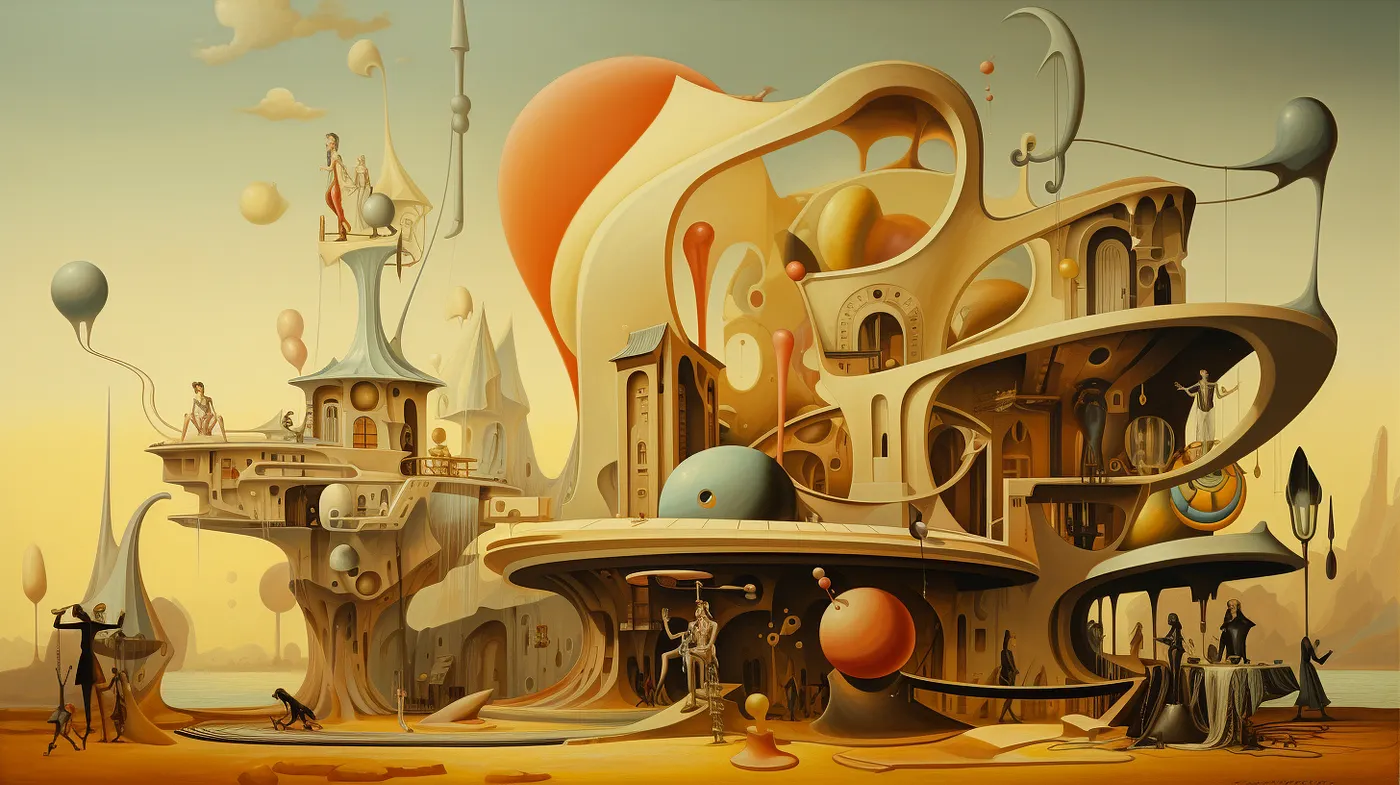
What is art? That’s the fundamental question we must answer.
According to the RAE (Royal Spanish Academy):
- m. or f. Capability, skill to do something
- m. or f. Manifestation of human activity through which the real is interpreted or the imagined is represented using plastic, linguistic, or auditory resources.
Both definitions are valid, in reality, there are no wrong concepts when it comes to defining art. It’s a subjective matter that each person perceives differently and labels as art.
Personally, I believe that “what is” corresponds to the second definition and to achieve it, you need the first one. However, I think art arises from the need to express and communicate. Considering this, we could say that art began in prehistory when our ancestors communicated and depicted, often scenes of hunting, their daily lives. To illustrate this, we have the most renowned and preserved caves:
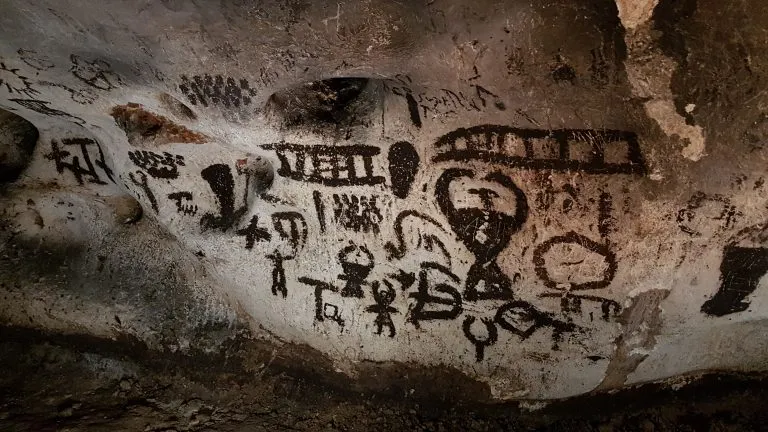
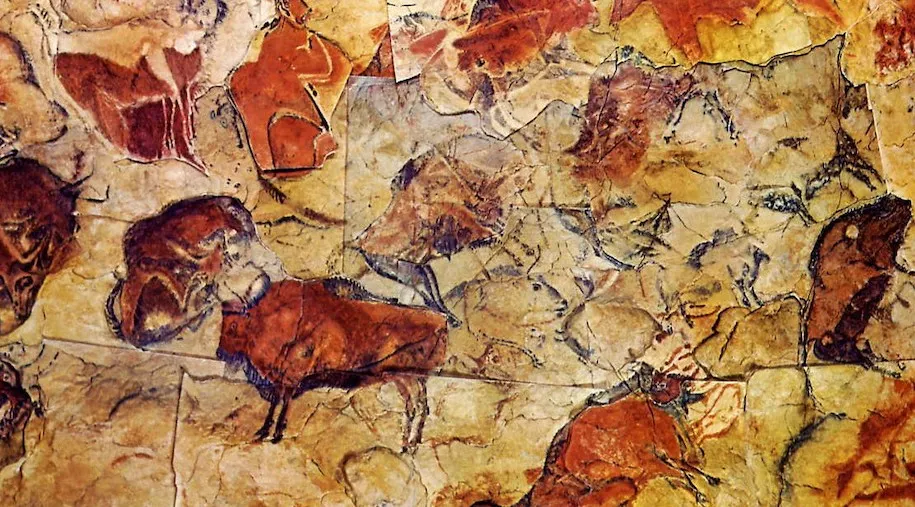
Magura and Altamira’s cave
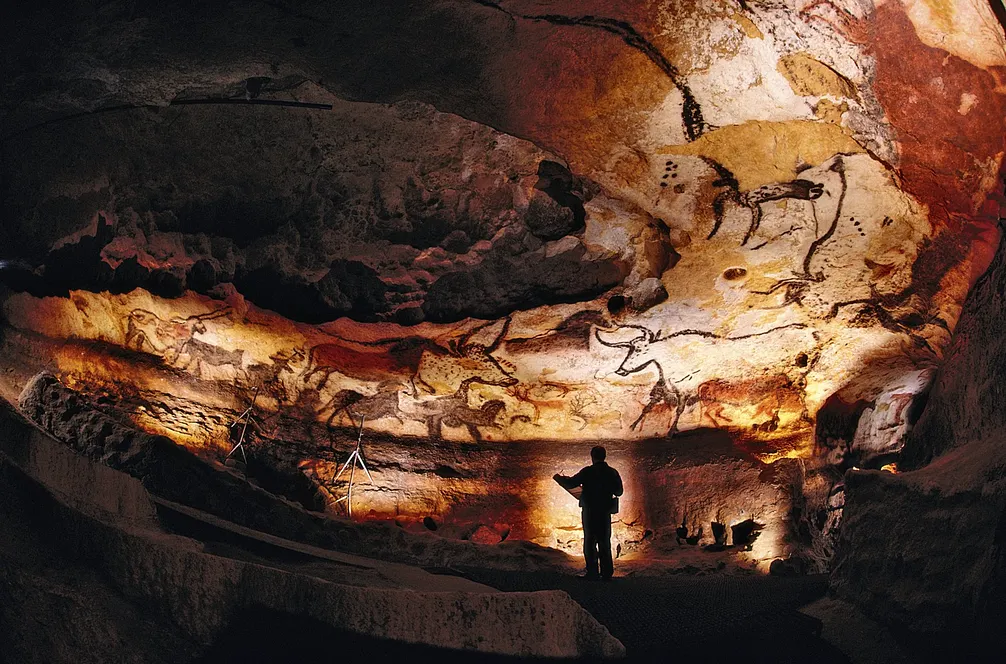
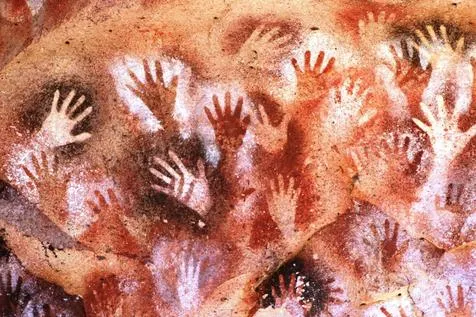
Lascaux and Hand’s Cave
And these are some examples to illustrate what was mentioned earlier.
Over the years, different artistic movements have emerged, each reflecting the societal context of its time, and each being the consequence of what came before. This evolution is driven by the human need to communicate.
This need to express oneself is intrinsic; even before birth, we kick in the womb, when we are born, we cry, and as we grow, we draw and, ultimately, learn to speak. We are compelled to learn certain codes dictated by the culture we are born into to make ourselves understood. Art has functioned as an international language, and because it’s visual, it varies in its elements and the cultural context it’s aimed at.
With this tool and this need, the design was born. Design, or at least the first recorded sightings of it, date back to the late 19th century, around 1891, with Henri de Toulouse-Lautrec and his posters for the Moulin Rouge. It’s worth noting that at the same time, the Art Nouveau movement was providing clarity and coherence to design in terms of composition, moving away from the typographic variation that gave it a disorderly, medieval appearance. This variation was a result of the creation of the printing press in 1440 and the movable type that existed but hadn’t been updated until the late 19th century.
The avant-garde movements that followed Art Nouveau were responsible for providing style and coherence to composition.
As artistic movements changed, design also evolved. We must remember that art reflects society, and design aims to provide a communication solution with a specific objective.
Now, what is design itself?
According to Google’s dictionary:
Creative activity that aims to project objects that are useful and aesthetic.
I would add objects or ideas because there are different design disciplines and ways to execute them.
Graphic design, according to Wucius Wong, is:
“A visual creation process with a purpose.”
In addition, its principle, according to the same author, would be as follows:
“The designer should seek the best possible way for that ‘something’ to be shaped, manufactured, distributed, used, and related to its environment. Their creation should not only be aesthetic but also functional, reflecting or guiding the taste of their era.”
So, art and design are linked in communicating the needs of society, albeit with different objectives. Art is about reflecting emotions, making claims, or raising awareness, while graphic design is about leveraging the cultural context’s codes to help the recipient identify with the message and achieve the predefined goal.
— Val ✦